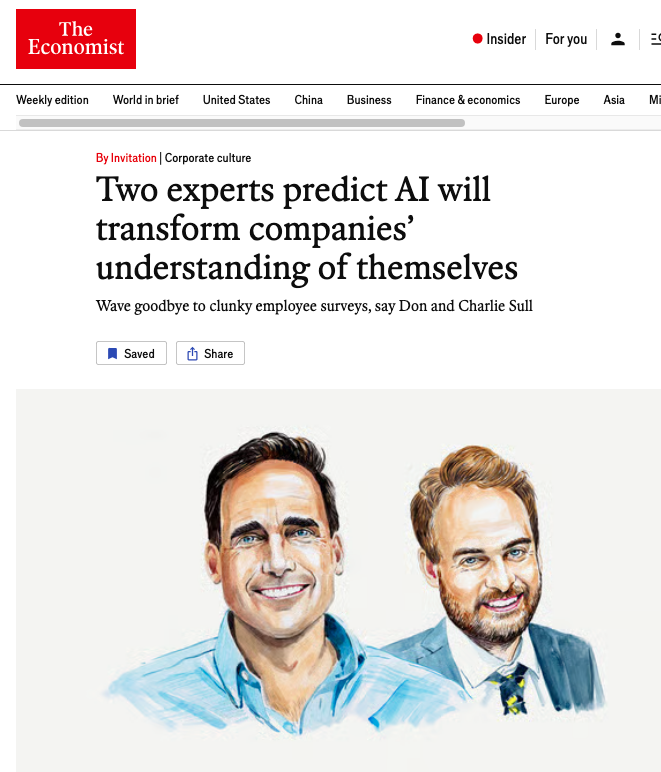
CultureX research has been featured in











Agile companies execute faster than competitors when AI, geopolitics, regulatory uncertainty, and macroeconomic shocks punish laggards. The most agile companies earn twice the total shareholder returns of the average company. CultureX helps companies measurably improve their strategic agility.
Built on our research into what sets the world’s most agile companies apart from their peers, the Index analyzes four million online employee reviews to measure strategic agility across nearly 2,000 companies and 48 of the industries most exposed to AI disruption.
In twenty-five years of research and client work, we’ve identified seven aspects of an organization that accelerate execution, or slow it down.
Take initiative and hold yourself responsible for results.
Employees take initiative without waiting for permission or instructions, get things done, and hold themselves and others responsible for results.
Read more →Attract exceptional talent and fight to keep the best.
The organization attracts exceptional talent, fights to keep the best, and parts ways with those who fall short of high standard for skills and behaviors.
Read more →Everyone on the same page.
Employees at every level understand the strategy and align their activities with it because goals, progress, and performance are shared openly.
Read more →Speak the truth, even when it’s uncomfortable.
Employees speak the truth even when it’s uncomfortable, challenge each other directly and respectfully, and change their minds with new evidence.
Read more →Move cash, talent, and attention to the best opportunities.
The organization moves cash, talent, and attention quickly from failed bets and declining businesses to the most promising opportunities.
Read more →Minimal bureaucracy and barriers.
Leaders eliminate excess bureaucracy, simplify unnecessary complexity, and manage remaining complexity with simple solutions and collaboration across teams.
Read more →Never stop trying to be better.
Employees act with urgency, pursue ambitious goals, and remain paranoid about emerging threats, even when the company is doing well.
Read more →










Being AI-native allows us to execute on our globally recognized agility thought leadership more effectively and at a fraction of the cost of traditional consulting firms. Our ideas, straight to you: that’s the promise of AI.
Our framework is grounded in decades of empirical research across countries, industries, and environmental shocks, which have been published in four books, ten best-selling Harvard Business Review articles, and the MIT Strategic Agility Project. We’ve road-tested our approach with the top teams of more than 100 leading global organizations and teaching hundreds of executives at London Business School and MIT Sloan.
Our award-winning AI platform developed at MIT measures more than 400 granular aspects of leadership behavior, corporate culture, and organizational processes — drawn from data your company already has. It benchmarks you against industry peers to identify the highest-leverage opportunities to improve strategic agility, pinpoints where to intervene, and tracks progress over time.
Most efforts to improve agility focus narrowly on specific processes, such as sprints or OKRs. Our approach addresses the bigger picture — the seven contextual drivers that together shape the behaviors that either accelerate or hinder execution.
We give your leaders a framework grounded in cutting-edge research, a highly tailored diagnostic, curated recommendations based on what we’ve learned from the most agile companies, and deep, hands-on support as they implement. We help the leaders accountable for results to execute more effectively, rather than try to do the job for them and leave once the engagement’s done.
By leveraging AI to pinpoint granular opportunities to accelerate execution, coaching rather than replacing your leaders, and maintaining a lean organization, we can deliver measurable improvements in strategic agility at a fraction of the cost of traditional management consultancies. We charge for the value we add, not the hours we bill.
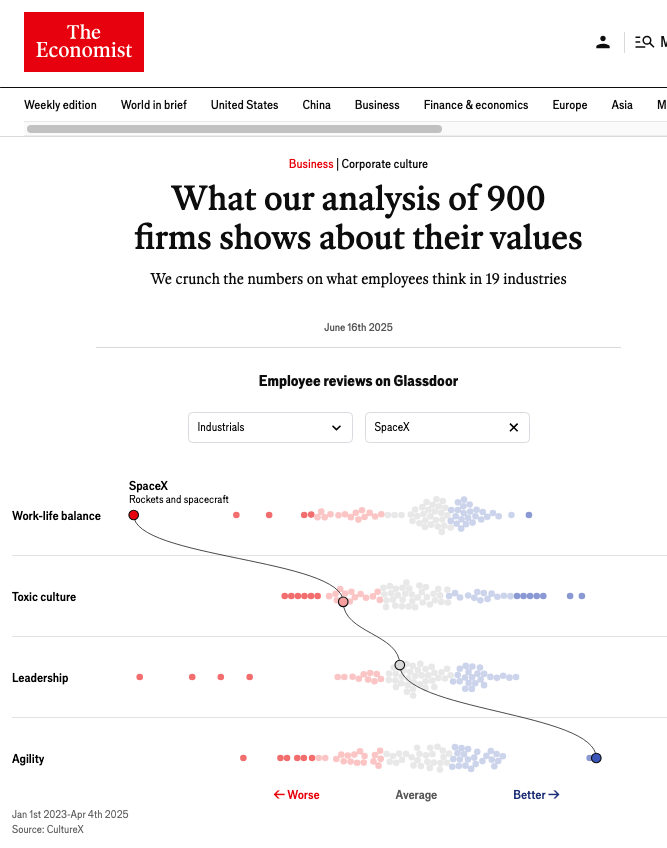
Research produced by CultureX and its co-founders, published in Harvard Business Review, MIT Sloan Management Review, The Economist, and elsewhere.







As a company’s operating system, culture guides countless important decisions and norms to affect a variety of organizational outcomes in addition to largely determining the employee experience. Is your culture working for you, or against you?


To execute your strategy, what culture do you need?
Culture impacts employee experience, strategy execution, and corporate reputation. We address all three. Leverage the Professor who teaches the intro to strategy course at MIT Sloan, and whose work on strategic culture has been read by an audience of millions.
Get the right answer to the essential question: what culture do we need to achieve all of our strategic objectives?
We largely invented AI-based cultural measurement
Without effective measurement, culture is bad poetry. CultureX are globally recognized as the pioneers of AI-based cultural measurement, and our proprietary systems and knowledge ensure you will have the high-quality data you need to make actual progress towards your strategic objectives, along with experts who can help translate it into action.
Irreplicable judgement and expertise to solve your challenges
Work hands-on with the thought leaders who have produced some of the most innovative developments in corporate culture research over the past decade. We know exactly what your data says, exactly what will move the needle, and exactly what leading firms do to address the same challenges you face.
We have been doing this for a decade with dozens of leading firms, and we will work closely with you to ensure measurable results are realized.
Across our index of nearly 2,000 companies and 48 industries, a small set of organizations stand head and shoulders above their peers on all seven dimensions of strategic agility and also outperform the S&P 500 by 2x on average. Over the coming year, CultureX is publishing a study of what they do differently — including conversations with their CEOs and other top leaders.
Sign up to learn more about the Culture Champions project.
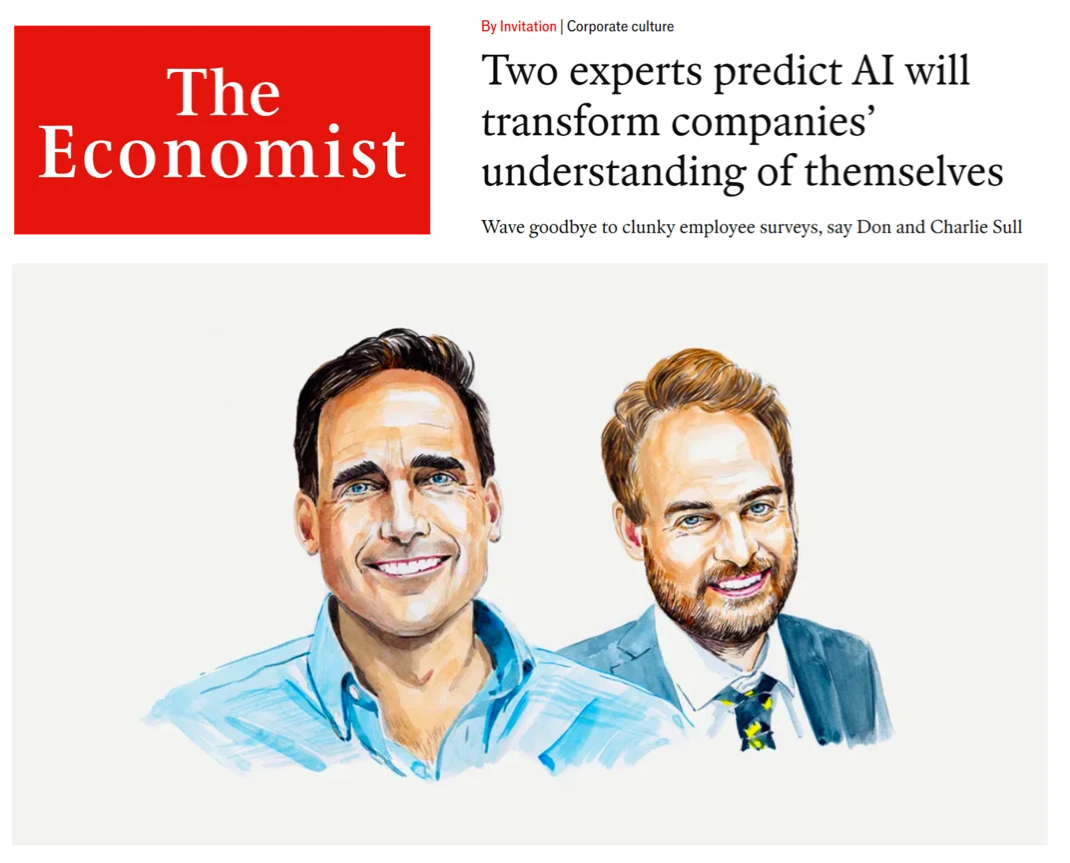
Recognized by The Economist as global experts in culture, execution, and AI, Don and Charlie founded CultureX to rigorously measure strategic agility and help companies win in turbulent markets. Their proprietary AI platform is built on decades of empirical research and has helped dozens of leading firms make their organizations measurably more agile.

Professor of the Practice at MIT Sloan, where he teaches courses on formulating and executing strategy. Don has been studying organizational agility and execution for thirty years, has written four books and ten best-selling Harvard Business Review articles, directs the Strategic Agility Project at MIT, and has advised the executive teams of more than 100 leading companies.
LinkedIn
Charlie is the co-author of the most-read series in MIT Sloan Management Review’s 67-year history, a Harvard Business Review cover story, and recent invited pieces in The Economist. He developed the award-winning cultural measurement AI platform that powers CultureX engagement and research, and has advised the executive teams of dozens of leading companies.
LinkedInThe research is produced by CultureX, the research and technology firm co-founded by Donald Sull and Charlie Sull. Don is Professor of the Practice at MIT Sloan and directs the Strategic Agility Project at MIT; Charlie is co-author of the most-read series in MIT Sloan Management Review’s 67-year history. Their work has been published in Harvard Business Review, MIT Sloan Management Review, and The Economist — and CultureX is the firm behind the AI platform and index that power it.
CultureX’s award-winning AI platform, developed at MIT, analyzes four million online employee reviews for natural-language mentions of the seven drivers of strategic agility. Each of the nearly 2,000 companies in the Strategic Agility Index is scored across 48 industries and benchmarked against industry peers.
CultureX helps leadership teams measurably improve strategic agility: a tailored diagnostic built on the firm’s measurement platform, benchmarking against industry peers, curated recommendations drawn from the most agile companies, and hands-on support through implementation.